Sep. 02, 2026
When industrial filtration systems need reliable performance, corrosion resistance, and long service life, Porous Disc of SS316L is a popular choice.
SS316L porous discs are made from stainless steel 316L using advanced porous metal manufacturing technology. They provide controlled porosity, excellent mechanical strength, and good resistance to chemicals and high temperatures. These properties make them suitable for filtration, gas distribution, fluid processing, laboratory equipment, pharmaceutical production, chemical processing, and many other industrial applications.
For engineers and purchasing managers, choosing the right porous metal disc is not only about the material. Factors such as pore size, permeability, thickness, diameter, pressure rating, filtration efficiency, surface finish, and manufacturing process can all affect performance.
This guide explains what SS316L porous discs are, how they are manufactured, their advantages, applications, and how to select the right product for your system.
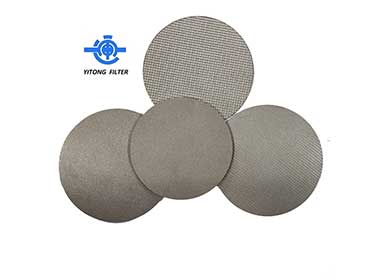
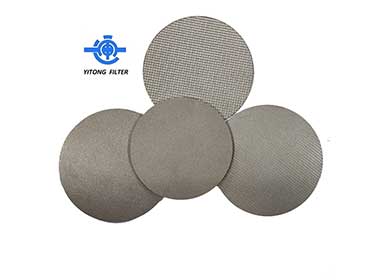
A Porous Disc of SS316L is a circular porous metal filter or functional component manufactured from 316L stainless steel.
Unlike conventional solid stainless steel discs, a porous disc contains a large number of interconnected pores throughout its structure. These pores allow gases or liquids to pass through while providing controlled filtration or flow distribution.
The pore structure can be engineered to meet different application requirements.
Depending on the manufacturing process, SS316L porous discs can be produced with different:
Pore sizes
Porosity levels
Thicknesses
Diameters
Permeability rates
Filtration ratings
Surface finishes
Mechanical strengths
This flexibility allows engineers to use porous stainless steel discs in both standard and customized filtration systems.
The material used to manufacture a porous disc has a major influence on its performance.
SS316L stainless steel is an austenitic stainless steel containing chromium, nickel, and molybdenum. The addition of molybdenum improves its resistance to many corrosive environments compared with 304 stainless steel.
The low-carbon composition of 316L also makes it suitable for applications where corrosion resistance and welding performance are important.
Excellent corrosion resistance
Good resistance to many chemicals
High mechanical strength
Good resistance to elevated temperatures
Good weldability
Excellent durability
Suitable for demanding industrial environments
Good compatibility with many process fluids
Easy to clean compared with many conventional filter materials
For these reasons, 316L porous metal discs are widely considered when conventional polymer or fiber filters cannot provide the required durability.
One of the biggest advantages of an SS316L porous disc is its corrosion resistance.
Industrial filtration systems may come into contact with water, chemicals, solvents, gases, acids, or other aggressive process media.
316L stainless steel can provide better corrosion resistance than many commonly used stainless steel grades, particularly in environments where chloride exposure is a concern.
This makes it a suitable material for applications in:
Chemical processing
Pharmaceutical manufacturing
Food processing
Water treatment
Petrochemical production
Laboratory equipment
Industrial gas systems
However, material compatibility should always be evaluated based on the specific chemical, concentration, temperature, and operating conditions.
The pore structure is one of the most important characteristics of a porous metal disc.
A properly designed porous disc can provide a controlled path for gases or liquids while retaining unwanted particles.
Depending on the manufacturing technology and design requirements, different pore sizes can be produced.
For example, an application requiring fine particle retention may need a smaller pore structure, while a gas distribution application may prioritize high permeability and low pressure drop.
Therefore, pore size should not be selected independently. It should be considered together with flow rate, pressure drop, particle size, and filtration requirements.
Compared with many polymeric filter materials, porous stainless steel provides excellent mechanical strength.
SS316L porous discs can withstand demanding operating conditions, including:
High differential pressure
Mechanical vibration
Repeated cleaning
Industrial handling
Temperature fluctuations
This makes them particularly useful for industrial systems where the filter element must remain structurally stable over a long operating period.
Temperature is another important consideration in industrial filtration.
Some applications involve hot gases or liquids where conventional plastic filter media may soften, deform, or lose performance.
Because SS316L is a metal material, porous stainless steel discs can be used in higher-temperature environments, subject to the specific manufacturing process, structure, sealing method, and operating conditions.
For high-temperature applications, engineers should evaluate the complete filter assembly rather than considering the metal material alone.
Another important advantage of porous metal filters is their potential for cleaning and reuse.
Depending on the application, SS316L porous discs can be cleaned using methods such as:
Backwashing
Reverse-flow cleaning
Ultrasonic cleaning
Chemical cleaning
High-pressure cleaning
Other application-specific cleaning methods
The appropriate cleaning method depends on the contaminants, pore structure, operating conditions, and filter design.
Proper cleaning can help extend service life and reduce the frequency of filter replacement.
The manufacturing process can significantly affect the pore structure and final performance of a porous metal disc.
One common manufacturing method is powder metallurgy.
High-quality 316L stainless steel powder is selected according to the required particle characteristics and application.
The powder properties influence the final pore structure.
The stainless steel powder is prepared and processed to achieve a consistent material composition and particle distribution.
The prepared powder is formed into a disc-shaped structure.
The forming process must be carefully controlled to achieve the required dimensions and density.
The formed stainless steel material is heated under controlled conditions.
During sintering, the particles bond together while maintaining interconnected pores.
This creates a strong porous metal structure.
Depending on the application, additional machining may be performed to achieve the required:
Diameter
Thickness
Flatness
Edge dimensions
Mounting features
The porous disc may undergo cleaning, surface treatment, passivation, or other finishing processes depending on the final application.
The finished product can be inspected for dimensional accuracy, pore characteristics, permeability, mechanical performance, and other customer-specific requirements.
Different filter materials have different advantages.
| Feature | SS316L Porous Disc | Polymer Filter | Fiber Filter |
|---|---|---|---|
| Corrosion resistance | Excellent | Depends on polymer | Depends on fiber |
| Mechanical strength | High | Medium | Relatively low |
| Temperature resistance | High | Usually lower | Depends on material |
| Cleanability | Excellent potential | Depends on material | Often limited |
| Reusability | Excellent potential | Application dependent | Usually limited |
| Customization | High | High | High |
| Industrial durability | Excellent | Medium to high | Medium |
This does not mean that stainless steel is always the best solution. The correct filter material depends on the application.
For harsh industrial environments, however, SS316L porous metal can provide an excellent combination of durability, corrosion resistance, and filtration performance.
SS316L porous discs are used across many industries because of their combination of filtration performance and material durability.
Pharmaceutical manufacturing requires reliable filtration and hygienic equipment.
316L stainless steel is widely used in pharmaceutical processing equipment because of its corrosion resistance, cleanability, and compatibility with many processing environments.
SS316L porous discs can be used for applications such as:
Gas filtration
Sterile process systems
Fluid filtration
Gas distribution
Vent filtration
Process equipment
The exact material and surface requirements should be selected according to the applicable process and regulatory requirements.
Chemical processing systems often involve aggressive fluids and gases.
A porous stainless steel disc can be used where conventional filter media may have insufficient chemical or mechanical resistance.
Typical applications include:
Chemical filtration
Gas separation
Process fluid filtration
Catalyst support
Gas distribution
Laboratory chemical equipment
Material compatibility must be checked against the specific chemical environment.
Food and beverage systems require equipment that can be cleaned effectively and withstand repeated processing cycles.
SS316L is commonly considered for hygienic applications because of its corrosion resistance and cleanability.
Porous stainless steel discs can be integrated into specialized filtration and gas distribution systems.
SS316L porous discs can also be used in liquid filtration systems.
They can provide a rigid porous structure capable of handling continuous flow and repeated cleaning.
Potential applications include:
Industrial water filtration
Process water treatment
Pre-filtration
Liquid distribution
Laboratory filtration equipment
Porous metal is not only used to remove particles.
Its interconnected pore structure can also make it useful for gas distribution.
For example, a porous disc can help distribute gas more evenly across a chamber or process area.
This makes SS316L porous discs useful in:
Gas sparging
Gas diffusion
Gas distribution
Air filtration
Process gas systems
Small porous stainless steel discs are frequently considered for specialized laboratory equipment.
Their compact size, controllable pore structure, and chemical resistance make them suitable for customized components.
Applications can include:
Gas diffusion
Liquid filtration
Sample preparation
Pressure control
Flow restriction
Specialized analytical equipment
Choosing a porous disc should begin with the operating conditions rather than simply selecting a standard size.
Here are the most important factors to consider.
Pore size determines the filtration and flow characteristics of the disc.
Ask:
What particle size needs to be retained?
Is the disc used for filtration or gas distribution?
What flow rate is required?
What pressure drop is acceptable?
A smaller pore size can provide finer filtration but may increase pressure drop.
Common applications may require small discs, while industrial equipment may need larger diameters.
The diameter should match the available installation space and sealing design.
Custom diameters can often be manufactured for OEM applications.
Thickness affects mechanical strength and flow resistance.
A thicker porous disc may provide greater structural stability, but it can also affect permeability and pressure drop.
Therefore, thickness should be selected according to the actual operating pressure and flow requirements.
Permeability is especially important when the porous disc is used for gas or liquid flow.
Two discs with similar dimensions may have different flow performance because of differences in pore structure and porosity.
When purchasing, it is useful to provide the required:
Flow rate
Fluid or gas type
Operating pressure
Operating temperature
Differential pressure
This allows the manufacturer to recommend a suitable porous structure.
The required surface finish depends on the application.
Standard industrial applications may require a normal sintered surface, while hygienic, pharmaceutical, or specialized applications may require additional surface treatment.
A porous disc may be installed directly into equipment or integrated into a larger filter assembly.
Depending on the design, the disc can be manufactured with different mounting or connection configurations.
For OEM projects, provide drawings or detailed dimensional requirements to the manufacturer.
SS316 and SS316L are closely related stainless steel grades, but their carbon content differs.
316L has a lower carbon content than 316.
This lower carbon content can improve resistance to sensitization during welding and is one reason why 316L is commonly selected for fabricated equipment and applications where welding is involved.
For porous metal components, the best choice depends on the manufacturing process and the requirements of the final application.
If welding or hygienic processing is involved, SS316L porous discs are often worth considering.
Even a high-quality porous metal filter requires proper operation and maintenance.
Avoid operating the disc beyond its recommended pressure, temperature, or flow conditions.
Select a cleaning method compatible with the contaminant and stainless steel material.
The porous structure should not be scratched, crushed, or deformed during installation or cleaning.
A gradual increase in differential pressure can indicate contamination or blockage.
Monitoring pressure drop can help determine when cleaning is required.
Unused porous discs should be stored in clean and dry conditions and protected from contamination or physical damage.
Not every industrial filtration system can use a standard-size porous disc.
Many OEM projects require customized dimensions and performance specifications.
A manufacturer may be able to customize:
Disc diameter
Thickness
Pore size
Porosity
Permeability
Surface finish
Edge configuration
Mounting structure
Filtration rating
Packaging
For custom projects, providing complete technical information at the beginning can make the design and quotation process much more efficient.
Useful information includes:
Material: SS316L
Diameter: ___ mm
Thickness: ___ mm
Pore size: ___ μm
Flow medium: Air / Gas / Water / Chemical / Other
Operating temperature: ___ °C
Operating pressure: ___ MPa
Required flow rate: ___
Application: ___
Selecting the right porous disc is more than choosing stainless steel and a pore size.
The manufacturing process directly influences the final performance of the product.
An experienced manufacturer can help customers evaluate:
Material selection
Pore structure
Filtration performance
Permeability
Pressure drop
Mechanical strength
Dimensional requirements
Surface treatment
Cleaning requirements
OEM customization
This is particularly important for industrial applications where the porous disc is a critical component of the filtration system.
A Porous Disc of SS316L provides an effective combination of corrosion resistance, mechanical strength, controlled porosity, durability, and cleanability.
It can be used for both filtration and fluid or gas distribution in industries such as pharmaceuticals, chemicals, food processing, water treatment, laboratory equipment, and industrial manufacturing.
When selecting an SS316L porous disc, do not focus only on pore size or dimensions. Consider the complete operating environment, including flow rate, pressure, temperature, filtration requirements, chemical compatibility, cleaning method, and installation design.
For standard requirements, an experienced manufacturer can recommend a suitable specification. For OEM projects, customized SS316L porous discs can be designed around your equipment and process requirements.
If you are sourcing SS316L porous metal discs, sintered stainless steel filter discs, porous stainless steel filters, or custom porous metal components, provide your required diameter, thickness, pore size, flow rate, and application.
Shijiazhuang Yitong Filter Machinery Co., Ltd. can provide customized porous metal filtration solutions for industrial applications. Contact us with your drawings or technical specifications to discuss the right solution for your project.
Previous: None